Hyde Park Restoration Program
Protecting our iconic inner-city park for the future.
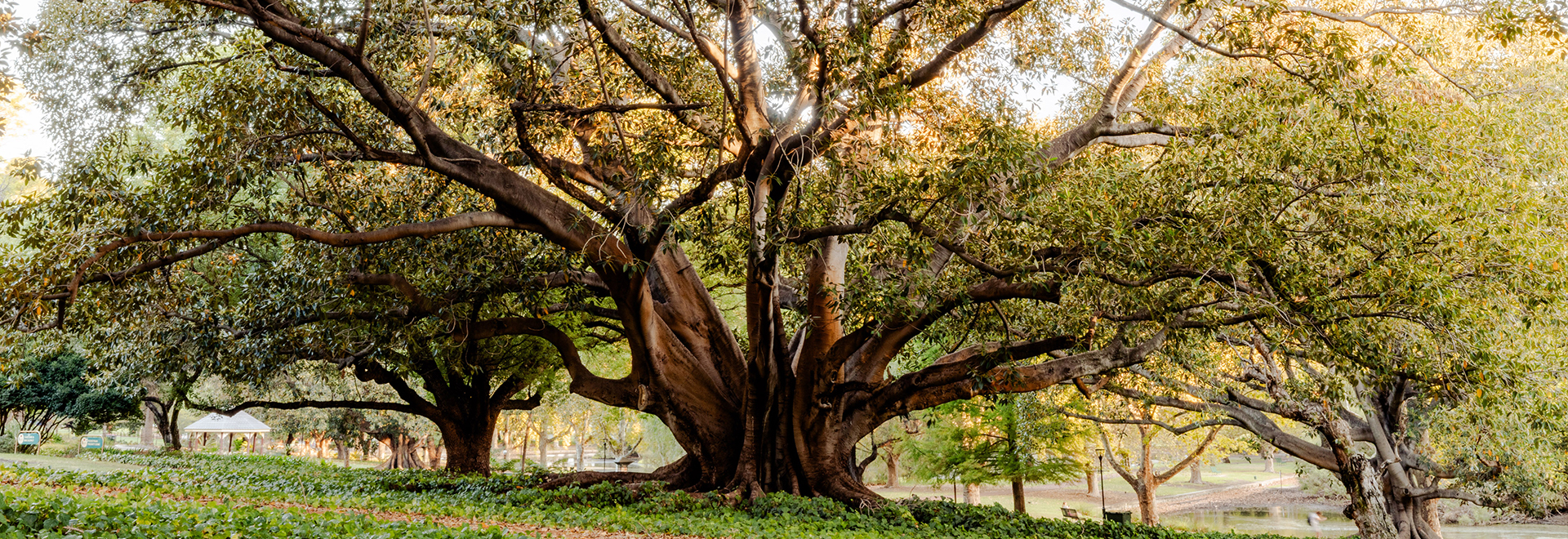
Hyde Park is one of most significant and cherished urban parks, valued for its mature tree canopy, wildlife habitat, heritage, and connection to the community. Protecting and enhancing Hyde Park for future generations is a key priority for the City of Vincent.
The Hyde Park Restoration Program has been developed in response to environmental challenges including climate change, habitat loss and the threat of polyphagous shot-hole borer (PSHB).
Starting with the Hyde Park Islands Restoration Project in 2025, additional funding has enabled us to expand our program across the entire park. Projects have been developed in consultation with the Hyde Park Reference Group.
The Hyde Park Restoration Program aims to:
Restore trees and plants that have been lost due to PSHB, particularly on the islands.
Preserve existing habitat and tree canopy including the heritage trees Hyde Park is known for.
Increase biodiversity to provide habitat for native wildlife and build resilience against current and future threats.
Happening now
Hyde Park Islands Restoration
Work to replant the two islands at Hyde Park started immediately following the removal of borer affected trees by the Department of Primary Industries and Regional Development in 2025.
We are now in our second year of works, with the aim to restore the islands to the same if not better condition than before.
In 2026 the focus has been on infill planting with around 17,000 new plants in the ground. The monthly maintenance schedule has recently focused on targeted weed control to give the plants the best chance of survival.
Tree species endemic to the area and those favoured by local wildlife have been carefully selected, including Eucalyptus, Banksia and Melaleuca. Species susceptible to PSHB will not be planted.
PSHB Treatment
We are researching and trialling treatment and prevention options for PSHB within Hyde Park. The aim is to improve our understanding of alternative management approaches beyond tree removal and to improve the health and resilience of our mature trees.
While no single treatment can currently eradicate the borer, evidence from California and local governments across Perth suggests that integrated pest management approaches can help retain infested trees and support their recovery over time.
We have two treatment trials underway and plans to expand these efforts by supporting additional research and treatments.
Recently completed
Significant preparation works were undertaken on the islands at Hyde Park in 2025 to prevent erosion and ensure the two islands were in the best possible condition for healthy plant growth.
In 2025 around 4,000 native plants were planted during winter including mature trees with a further 17,000 additional plants planted this year.
Pictured: restoration works taking place on the islands at Hyde Park in 2025.
Happening next
Funding assistance through the Australian Government’s Local Environmental Projects Program will allow us to continue the Hyde Park Restoration Program for at least the next three years. Upcoming projects include:
Native garden enhancement
Identified as an opportunity by the Hyde Park Reference Group, this project will expand the existing native garden and convert underused turf into native plantings. This will provide more food and habitat for wildlife, increase biodiversity and reduce groundwater use. Signage will help visitors learn about the benefits of native gardens and the role they play in supporting local wildlife.
Living stream
This project will improve the connection between Hyde Park's two lakes by creating an open vegetated channel with a bridge crossing. As well as improving water quality, it will create new habitat and make it easier for wildlife, including oblong turtles, to move between the lakes.
Perimeter tree planting
Planting new trees around the perimeter will help to better protect Hyde Park’s tree canopy from any potential future loss. Species will be carefully selected to complement Hyde Park’s heritage character and avoid PSHB host trees. The new trees will provide food, habitat and nesting opportunities for native wildlife, while increasing biodiversity across the park
Funding
Vincent has been successful in securing external funding to help support these important works at Hyde Park.
The first year of our islands restoration project was part-funded by a grant through the State Government’s Urban Greening Grants Program. This program is a collaboration between the Department of Water and Environmental Regulation and the WA Local Government Association (WALGA).
The expanded Hyde Park Restoration Program is part-funded by the Australian Government’s Local Environmental Projects Program.
Polyphagous shot‑hole borer
The polyphagous shot-hole borer (PSHB) continues to be a serious threat to trees across the Perth metropolitan area, including at Hyde Park. The national response to the borer is now on limiting its spread, with complete eradication no longer deemed feasible.
Vincent is working to protect our tree canopy and minimise further tree loss, and the Hyde Park Restoration Program is a significant part of that work. For more information about our local response, visit the Polyphagous shot-hole borer page.
LATEST UPDATES
Posted 16 April 2026
Second round of planting underway to restore Hyde Park islands
The City is continuing restoration of the Hyde Park islands with thousands of new native plants being established as part of the response to Polyphagous shot‑hole borer.
Posted 30 January 2026
Polyphagous shot-hole borer treatment at Hyde Park
The City, in collaboration with a team of highly specialised arborists, will be undertaking PSHB-related pruning and chemical treatment works
Posted 19 May 2025
Borer affected trees removed from islands at Hyde Park
Work is underway by DPIRD to remove trees heavily infested with Polyphagous shot-hole borer from the islands at Hyde Park.
Posted 08 October 2024
Polyphagous shot-hole borer treatment at Hyde Park
Treatment will start with the most heavily infested trees from 14 October 2024.
1